Loading — one moment.
GITDM handbook
GITDM Trading & Derivatives Handbook
The second volume: futures, options, hedging in practice, execution, model testing and the discipline of continuity.

Loading — one moment.
Loading the store — one moment.
GITDM handbook
The second volume: futures, options, hedging in practice, execution, model testing and the discipline of continuity.
You have finished the beginner material. You can read a candlestick chart, you understand what a bid and an offer are, you have placed an order in a simulator and you know roughly how a currency pair or a share moves. This handbook is the second volume of the GITDM store pair, sold at UGX 35,000, and it is written for the student standing at the next step: contracts whose value is derived from something else. Derivatives are not a harder version of the markets you already know. They are a different subject with different physics, because a derivative is a promise about a future price rather than a piece of ownership in a business or a country. Once you feel that difference, most of the rest of the book becomes straightforward.
We assume four things. First, that you can calculate a percentage change and a percentage of a number without hesitation; every worked example in this book is arithmetic you will do on paper, in UGX, and none of it needs algebra. Second, that you understand that a market has two sides and that for every buyer there is a seller with the opposite expectation. Third, that you have kept some record of your own trades, even a notebook, and you know how it felt to re-read it a week later. Fourth, that you are willing to be told something uncomfortable about yourself: the reason most people lose money in leveraged contracts is not ignorance of the instrument, it is the speed at which the instrument exposes poor discipline.
The first habit is writing things down before you commit money. A hypothesis, an entry rule, an exit rule, a position size, a maximum loss. Derivatives compress time; what takes a month to punish you in a share portfolio can take ninety seconds in a leveraged contract, and compressed time destroys memory. Written rules are the only antidote.
The second habit is thinking in exposure rather than in opinion. Beginners ask "will coffee go up?" Professionals ask "how much of my capital is exposed to coffee moving against me, and over what horizon?" Every chapter here returns to that reframing, because derivatives are the instruments where exposure and opinion are most easily separated.
The third habit is treating cost as a variable you control. Spread, commission, financing, slippage and roll are not overhead to be ignored; on a leveraged contract they are frequently larger than your expected edge. A trader who cannot state the round-trip cost of their strategy in shillings is not running a strategy, they are gambling with a chart open.
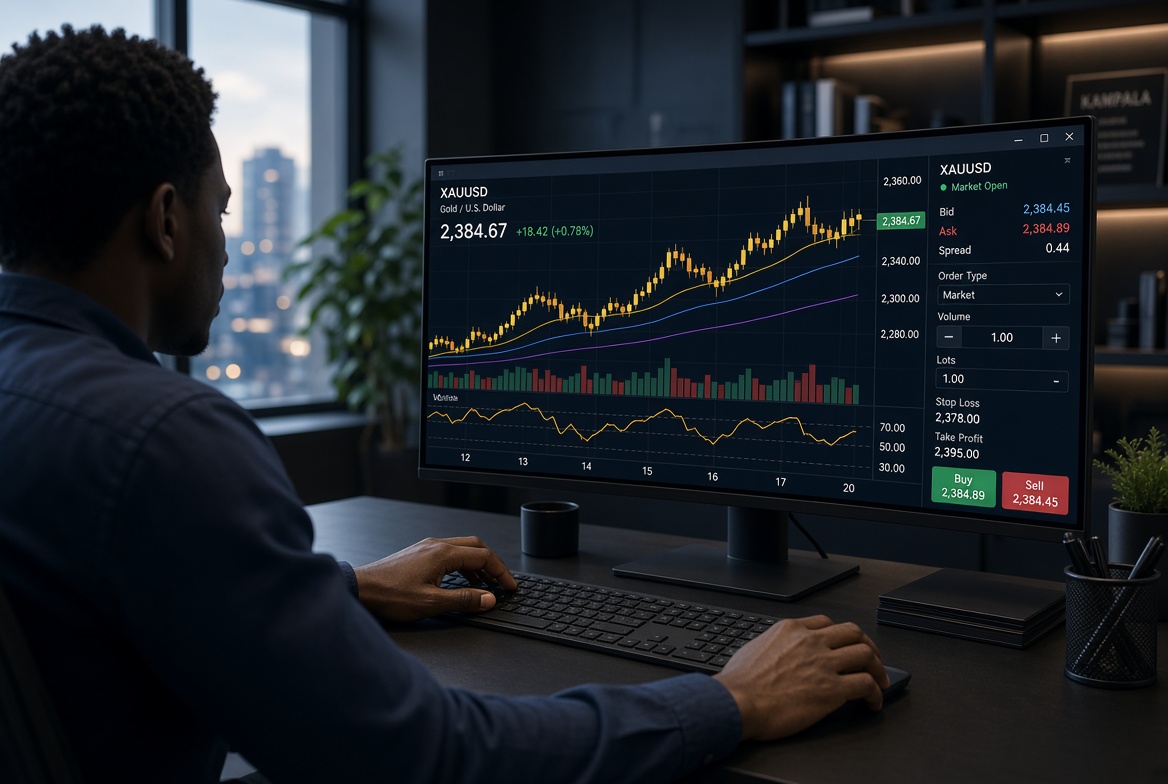
We will say this plainly here because we will not hide it later. Derivatives are higher risk than the markets they reference. A share you own cannot cost you more than you paid for it; a contract can, and in leveraged retail products it routinely does, because losses are settled in cash and can exceed deposited margin. Most retail traders lose money; this is not a rumour, it is the disclosure that serious brokers are required to publish, and the underlying figures usually sit between seventy and eighty-five percent of retail accounts. Leverage cuts both ways with perfect symmetry: it multiplies the losing trades exactly as generously as the winning ones. Nothing in this handbook is investment advice, and every number in it is illustrative. Prices, margins, contract sizes and rates here are invented for teaching. Before you transact in any real contract, obtain the actual contract specification and the actual risk disclosure from the actual venue, and satisfy yourself that you can afford to lose the entire amount you deposit.
GITDM Trading & Derivatives Handbook continues for 10 more chapters
Chapter one is free. Buying opens every chapter in your account.