Loading — one moment.

Loading — one moment.
Loading lessons — one moment.
Learn
Free lessons on instruments, prices and real risk — written for Kampala, honest about what trading will not do for you.
Getting started
Start here if you have never placed a trade. What trading is, what it costs to begin, and how to practise before any real money is involved.
Getting started
Trading means buying and selling assets like currencies, shares or gold to profit from price changes. A plain, honest explanation for Ugandan beginners.
Getting started
Instruments
What you can actually trade: currencies, shares, gold and commodities, indices, cryptocurrencies and derivatives — and what makes each one move.
Instruments
What the forex market is, what moves currency prices, what you actually buy when trading it from Uganda, and how to approach it safely.
Strategies and skills
The skills that turn a chart into a decision: reading structure, drawing levels, managing risk, following the news and staying honest with yourself.
Strategies and skills
What technical analysis is, how to read a chart step by step, and why indicators describe probability instead of predicting the future. For beginners.
Strategies and skills
Trading in Uganda
The questions Ugandan students ask before paying anyone: what a course should include, what it should cost, what the rules are, and what a realistic outcome looks like.
Trading in Uganda
A checklist for choosing a trading course in Uganda: syllabus, tutor, marked work, a verifiable certificate, total fee, refund terms and profit promises.
Trading in Uganda
Before you start
Free lessons
23
Published on this page
Subjects
4
Markets, risk and choosing a course
Cost to read
0 UGX
Every lesson listed above is free
A word of warning
Trading carries real risk — you can lose money quickly. These lessons are education, not investment advice, and no recommendation to buy or sell anything.
A practical step-by-step path for beginners in Uganda: learn the basics, practise on demo, choose a broker carefully, then start live with small money.
Getting started
A demo account lets you practise trading with fake money on live prices. Here is how to set one up so the practice actually transfers to real money.
Getting started
Trading works shorter-term price movements with active decisions; investing builds value slowly through time and ownership. Here is how to choose.
Getting started
Learning and demo practice cost almost nothing. For a live account, the honest answer is only money you can afford to lose entirely. Here is how to size it.
Getting started
A trading journal turns random trades into evidence. A simple template for beginners, a daily routine, and a weekly review that changes how you trade.
A clear explanation of what a share is, what moves its price, how to buy one from Uganda and how speculative share trading differs from owning a business.
Instruments
What drives the price of gold, oil and commodities, what you actually own when you trade them, and the honest costs for a beginner.
Instruments
An index is a measurement, not a company. Learn what indices track, what moves them, how traders take exposure to them and what the costs and risks are.
Instruments
What cryptocurrency is, what moves its price, what you really own when you trade it, the costs and the severe risks, explained plainly for a Ugandan beginner.
Instruments
A derivative takes its value from something else. What the four families are, what they cost, and why beginners lose money on them.
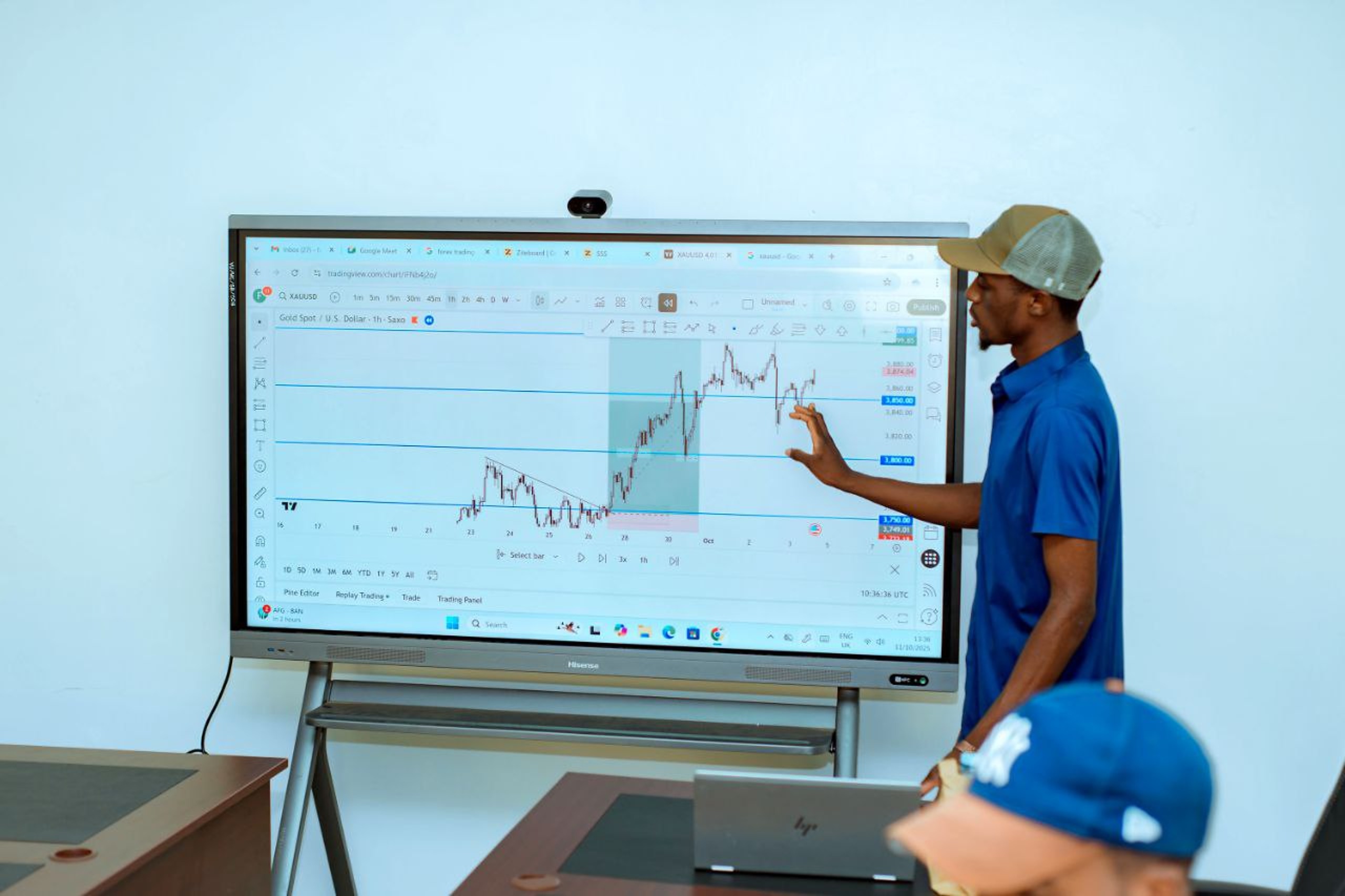
How to draw support and resistance levels that hold up, why levels are zones rather than lines, and how to handle a break without losing control of risk.
Strategies and skills
How candlesticks are built, what engulfing bars, hammers and doji really signal, and why context and a closed candle matter more than the shape.
Strategies and skills
Risk per trade, stop loss placement, position sizing with a worked UGX example, risk to reward and leverage, explained for Ugandan beginners.
Strategies and skills
What moves prices: interest rates, inflation, jobs data and local Ugandan factors. How to read an economic calendar and why markets react to surprises.
Strategies and skills
Fear, greed, revenge trading and overtrading explained, plus the practical habits that keep a beginner in Kampala following the plan they actually wrote.
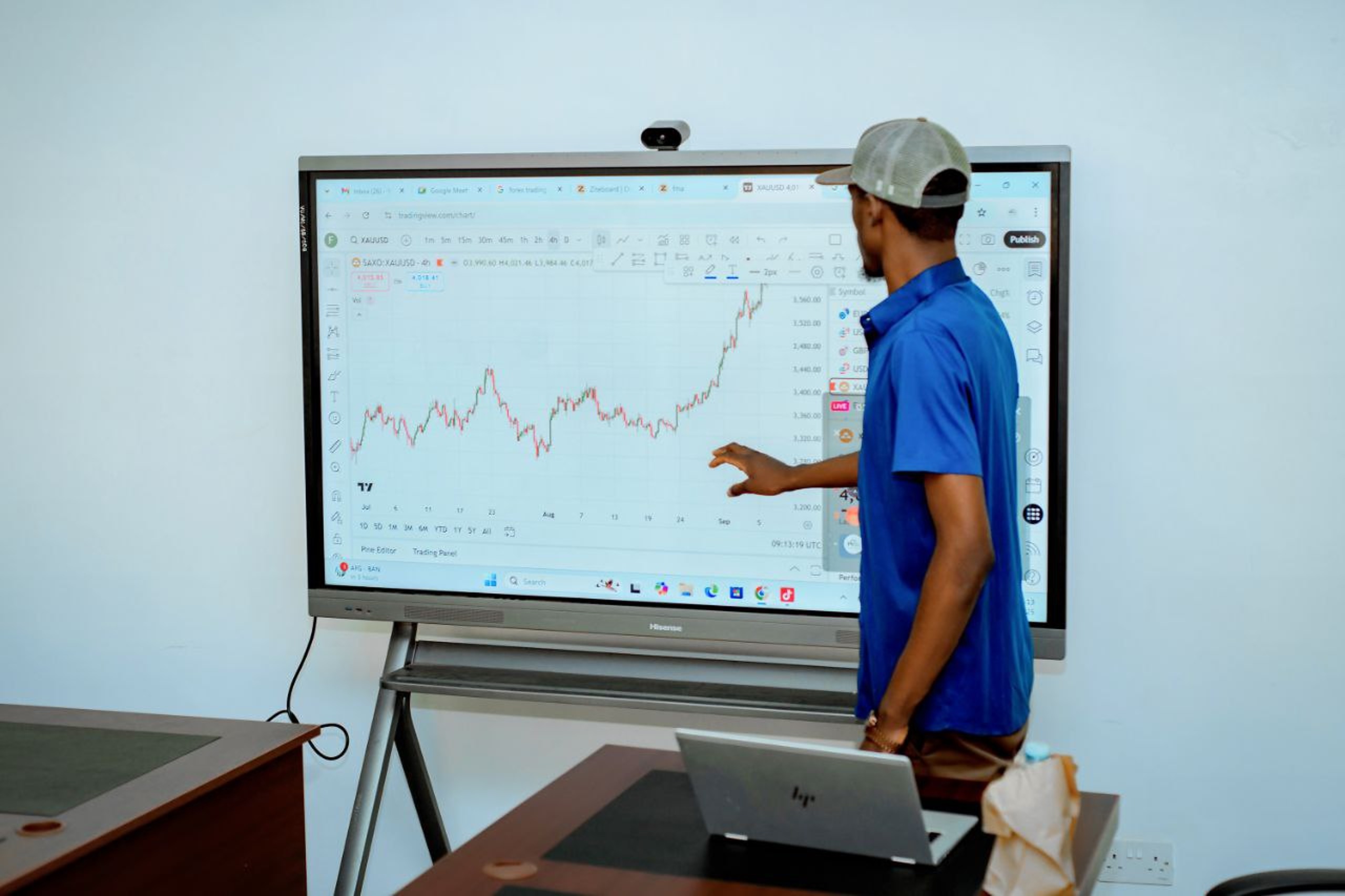
What drives trading course prices in Uganda, what your fee should cover, the hidden extras to ask about, and how to budget sensibly in UGX before you enrol.
Trading in Uganda
Is trading legal in Uganda? What the law covers, who regulates investment services, how tax on gains works, and how to check a broker licence first.
Trading in Uganda
Some people earn a living trading, most do not, and beginners are not among them. Here is what must be true first and what a realistic progression looks like.
Trading in Uganda
Trading and gambling are not the same, but undisciplined trading is gambling. Compare edge, cost, time horizon and behaviour, then run an honest self-check.
Readers
168
Across these lessons